The AI-Powered Digital Detox: Less Screen Time, More Living
An AI digital detox plan automates the busywork that keeps you glued to screens so you can disconnect without falling behind.
The irony of a digital detox is that most of the screen time you want to eliminate is not entertainment. It is administration. You are not doomscrolling for three hours. You are responding to messages, checking calendars, comparing grocery prices, rebooking a flight, and tracking a package — tasks that feel productive but leave you just as drained as if you had been watching videos the entire time.
An AI digital detox strategy does not ask you to abandon technology. It asks you to stop doing the work that technology should be handling on its own.
The Real Source of Screen Fatigue
Research from the American Psychological Association consistently links digital fatigue less to total screen hours and more to the cognitive load of constant task-switching. Each time you pick up your phone to "quickly check something," you are not performing one task. You are context-switching — reading, evaluating, deciding, responding — and then trying to return to whatever you were doing before. Multiply that by forty or fifty micro-interactions per day, and the exhaustion makes sense.
The problem is not that you use screens. The problem is that screens have become the interface for every small obligation in your life, and those obligations never stop arriving.
What AI Handles So You Can Disconnect
The Administrative Layer
Most of what pulls you to your phone is coordination work. Scheduling, rescheduling, confirming, comparing, reminding. An AI assistant absorbs this layer entirely.
Your dentist appointment needs to be moved? The AI handles the back-and-forth. Grocery delivery needs adjusting because the avocados are out of stock? Substitution handled. A friend texts asking when you are free next week? The AI checks your calendar and drafts a reply with three options.
You do not touch your phone for any of it. The decisions still reflect your preferences — the AI knows you prefer morning appointments, always substitutes organic, and keep Saturdays open — but the execution happens without you.
The Monitoring Layer
Half of screen pickups are not even tasks. They are checks. Did the package ship? Is the flight still on time? Did anyone respond to that email? These micro-checks feel harmless, but each one interrupts whatever you are doing and resets your attention.
AI eliminates the need to check. It monitors everything in the background and only surfaces what actually requires your attention. Your flight is on time? Silence. Your flight is delayed by two hours? One notification with the updated gate and a suggestion to rebook if the delay extends. The difference between "checking everything" and "being told what matters" is the difference between thirty phone pickups and three.
The Decision Layer
Decision fatigue is the silent driver of screen time. What should we eat tonight? What gift should I get for the birthday party? Which plumber has good reviews and availability this week?
Each question sends you into a research spiral — opening apps, reading reviews, comparing options, second-guessing. An AI assistant pre-processes these decisions. It presents one strong recommendation based on your history and preferences, with a backup option if you want it. You approve or adjust. The entire interaction takes fifteen seconds instead of fifteen minutes.
Building a Digital Detox That Actually Works
Define Your Offline Windows
A sustainable detox is not about going cold turkey. It is about creating protected windows where you are genuinely offline — and having confidence that nothing falls apart while you are away.
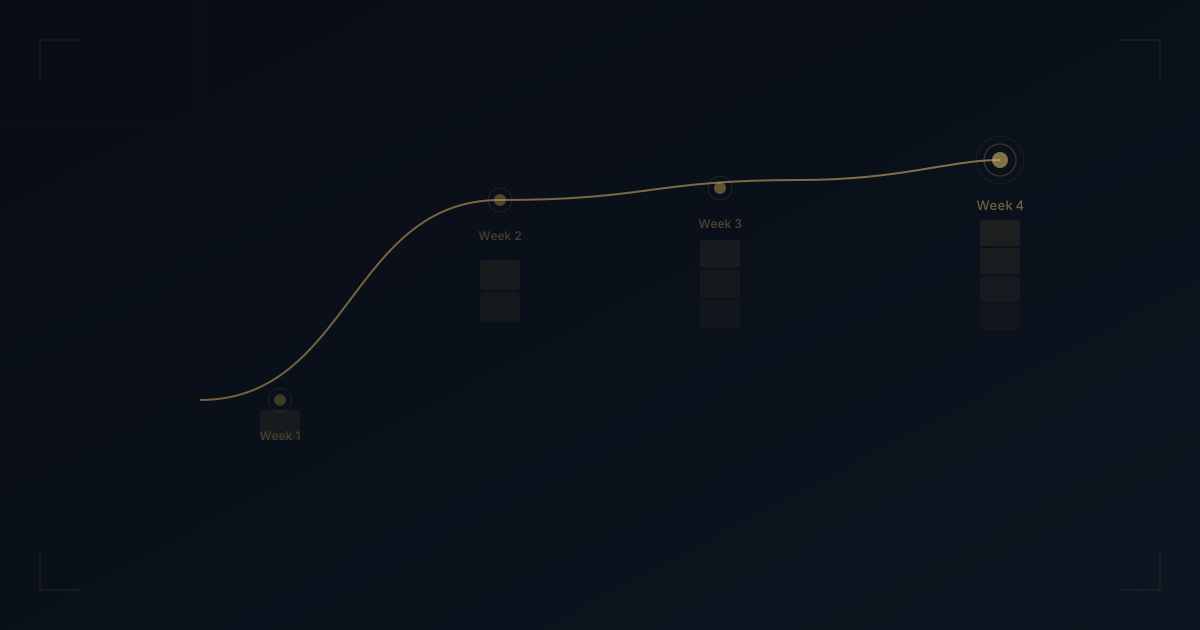
Start with one window. Maybe it is 6 PM to 8 PM on weekdays. During that window, your AI handles everything: incoming messages get triaged, routine tasks get executed, and only genuine emergencies reach you. Over time, you expand the windows as you build trust that the system holds.
Audit Your Pickups
Before you can reduce screen time, you need to know what drives it. Spend one week tracking why you reach for your phone. You will likely find that 70-80% of pickups fall into three buckets: checking status, coordinating logistics, and making low-stakes decisions. All three are automatable.
Replace Rituals, Do Not Just Remove Them
The morning phone check is a ritual. Removing it without replacement leaves a void that pulls you back. Replace it with an AI-generated morning briefing — a single summary delivered at the time you choose, covering weather, calendar, tasks, and anything that needs your attention. You get the same information in two minutes instead of twenty, and you get it without falling into an app rabbit hole.
The Paradox Resolves Itself
Using AI to reduce screen time sounds contradictory until you understand the distinction between active and passive technology use. Active use is when you direct technology toward a specific purpose and then stop. Passive use is when technology directs you — notification by notification, check by check — through an endless series of micro-tasks.
AI shifts the balance. It takes over the passive layer so that your remaining technology use is intentional. You sit down at your laptop to write, create, or connect — not to process an inbox of small obligations.
The Wellness Returns Are Tangible
People who implement structured digital detox practices report better sleep, lower anxiety, and improved focus within the first two weeks. But most digital detox advice fails because it asks you to simply stop doing things that genuinely need doing. Bills still need paying. Appointments still need scheduling. Groceries still need ordering.
AI is the missing piece. It is not about willpower or discipline. It is about removing the reason you were on your phone in the first place. When the busywork is handled, disconnecting is not a sacrifice. It is just what the evening looks like.
Reclaim Your Attention
The goal is not to live without technology. It is to live without being managed by it. When your AI handles the coordination, monitoring, and micro-decisions that fragment your day, you get something back that no productivity app can offer — presence.
Ready to spend less time on your phone and more time on what matters? Jipsa automates the busywork so you can actually disconnect.
Free Download
The AI Home Management Checklist
42 tasks AI can handle for your household — from meal planning to home maintenance. See exactly what to automate first.
Ready to let Jipsa handle this for you?
Try Jipsa while it's still in beta — free to use.