How to Stop Forgetting Errands, Bills, and Appointments
Forgetting things is not a character flaw. It is a system failure. Here is how AI stops the cycle of missed tasks, late bills, and forgotten appointments.
You forgot to pay the water bill. Again. The dentist appointment you rescheduled three months ago never made it back onto your calendar. The dry cleaning has been sitting at the shop for two weeks. You are not careless. You are overloaded.
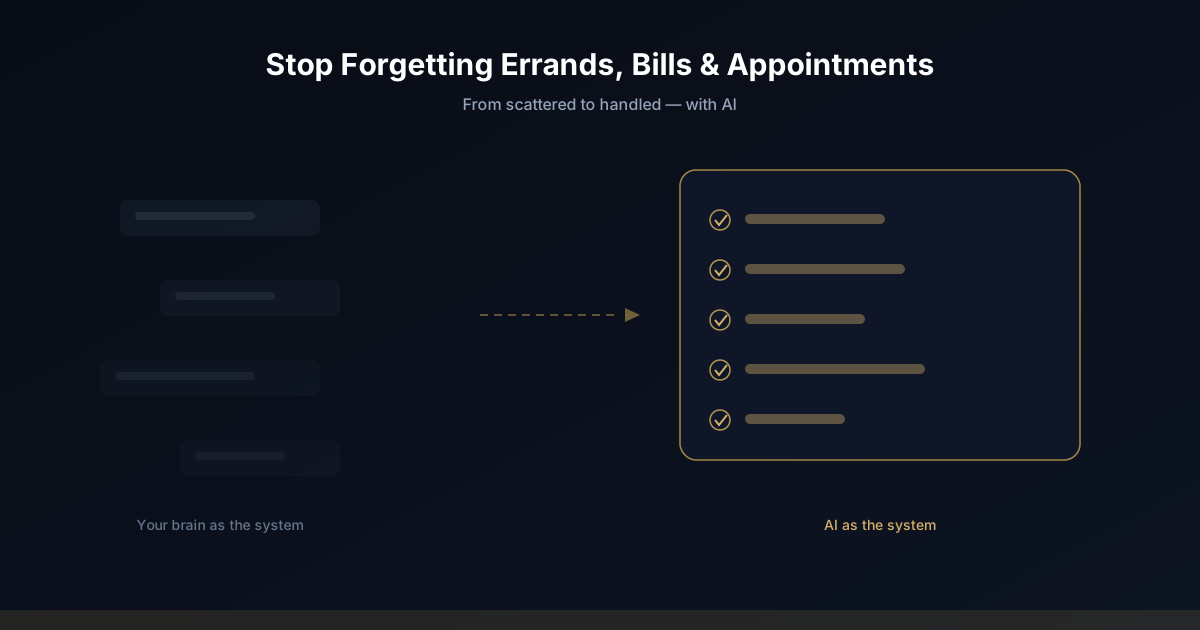
Forgetting errands, bills, and appointments is not a memory problem. It is a system problem. And the way to stop forgetting things with AI is not to set more reminders — it is to stop relying on your brain as the system.
Why Reminders Do Not Work
You already know about reminders. You have tried them. Phone notifications, sticky notes, calendar alerts, to-do apps. They work for a while. Then you start dismissing them. Then you stop setting them.
The problem with reminders is that they still depend on you. You have to remember to set the reminder. You have to act on it when it fires. You have to maintain the list. The cognitive load does not disappear — it just moves.
A reminder is a prompt. What you need is a handler.
The Difference Between Tracking and Handling
Tracking means you know about the task. Handling means the task gets done.
Most productivity tools are trackers. They store your tasks, sort them, and ping you. But the gap between "I know I need to do this" and "this is done" is where everything falls apart. That gap is filled with context switching, prioritization decisions, and the sheer friction of acting on dozens of small things every week.
AI closes that gap. Not by reminding you harder, but by taking ownership of the things that do not require your judgment.
What AI Actually Does Differently
When Jipsa manages your household, it does not just track your bills — it knows when they are due and alerts you before they are late. It does not just store your appointments — it monitors your calendar and flags conflicts. It does not just list your errands — it organizes them by priority and timing.
Here is what changes:
Bills: Jipsa tracks recurring payments, subscription renewals, and due dates. You get a heads-up before anything is late, not a notification after the fact.
Appointments: Your schedule is monitored holistically. Jipsa knows when your car is due for service, when the kids have checkups, and when you last saw the dentist. It surfaces what is coming without you having to remember to check.
Errands: Instead of a scattered to-do list, Jipsa maintains awareness of your household needs — what is running low, what needs pickup, what has been postponed too long.
The Mental Load Problem
Forgetting things is a symptom of mental load — the invisible work of keeping track of everything a household needs. Research consistently shows that this load falls disproportionately on one person in a household, and the cost is not just missed errands. It is stress, resentment, and burnout.
The solution is not to try harder. It is to move the tracking out of your head entirely.
This is what a personal AI butler does. It becomes the household's memory. Not a shared to-do list that one person maintains while the other ignores it. An actual system that holds everything and surfaces what matters, when it matters.
A Practical Setup
If you are drowning in forgotten tasks, here is how to start:
Week 1: Tell Jipsa about your recurring obligations. Bills, subscriptions, regular appointments. This takes one conversation.
Week 2: Start routing household needs through Jipsa instead of your mental list. Low on something? Tell Jipsa. Appointment to schedule? Tell Jipsa. Errand to run? Tell Jipsa.
Week 3: Notice what you have stopped worrying about. The things that used to slip through the cracks are now handled. Your brain is quieter.
This is not about becoming more organized. It is about needing less organization because the system holds what your brain should not have to.
The Real Cost of Forgetting
Late bill payments cost money — late fees, interest, credit score impact. Missed appointments cost time — rescheduling, waiting for the next available slot. Forgotten errands cost energy — the low-grade anxiety of knowing something is slipping but not knowing what.
Add it up over a year and the cost of forgetting is significant. Not catastrophic on any single day, but erosive over time. It is the kind of problem you adapt to instead of solving — until you realize there is a better way.
Stop Managing, Start Living
The goal is not to become a better task manager. The goal is to stop being a task manager entirely. Your brain is built for creativity, connection, and decision-making — not for remembering that the furnace filter needs replacing every 90 days.
Let the AI hold the details. You hold the things that matter.
Ready to stop forgetting? Jipsa remembers everything so you do not have to.
Free Download
The AI Home Management Checklist
42 tasks AI can handle for your household — from meal planning to home maintenance. See exactly what to automate first.
Ready to let Jipsa handle this for you?
Try Jipsa while it's still in beta — free to use.