The Compound Effect: What 90 Days with AI Actually Changes
The compound effect of AI automation is not one big win — it is 90 days of small optimizations that reshape how your household runs.
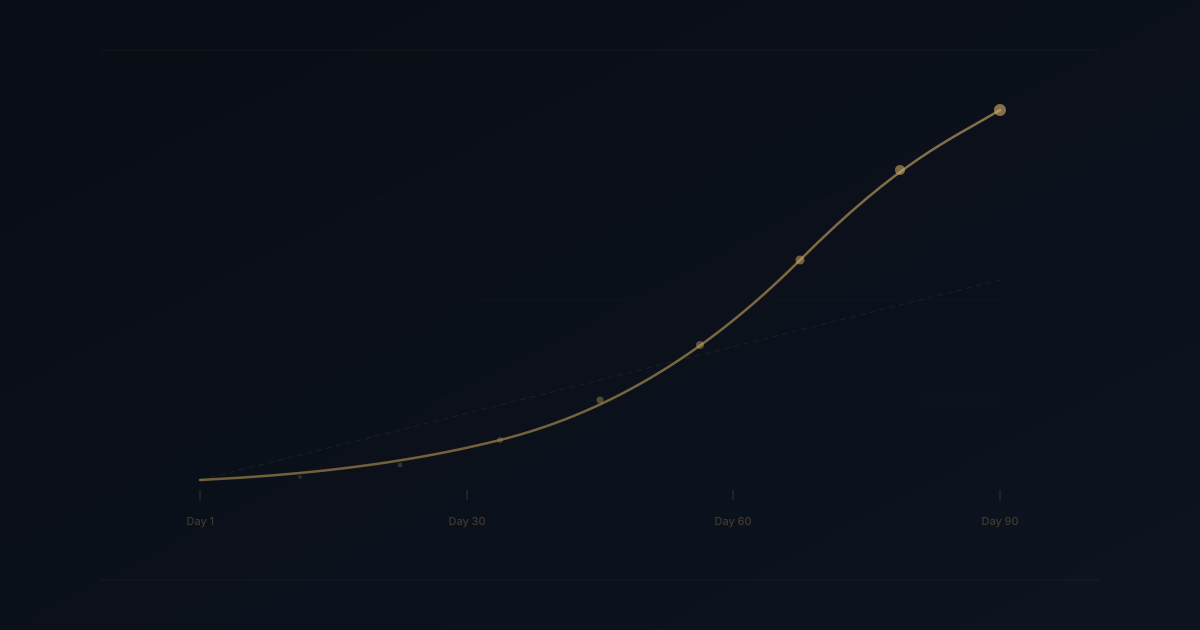
The first week with an AI assistant feels like a novelty. It books a restaurant, sorts your groceries, reminds you about the dry cleaning. Useful, but not transformative. You could have done all of that yourself. You wonder if you actually need this.
Then you reach day ninety. And you realize you have not thought about meal planning in two months. Your subscriptions have been optimized without you noticing. Three appointments were rescheduled around a conflict you did not even know about yet. Your household runs with a precision that would have required a full-time personal assistant — and you barely interact with the system anymore.
The compound effect of AI automation is not about any single task. It is about what happens when hundreds of small optimizations accumulate over time.
Week 1–2: The Delegation Phase
The first phase is mechanical. You are teaching the AI your preferences and handing off tasks one at a time. Grocery orders. Calendar management. Bill reminders. Each task feels like a small win, but the total time saved is modest — maybe thirty minutes a day.
What you do not see yet is that the AI is learning. Every preference you express, every correction you make, every task you approve or adjust is training a model of how you live. It is learning that you prefer sparkling water over still, that you never schedule anything before 9 AM, that you always want Italian restaurants over French, and that when you say "sometime next week" you mean Wednesday or Thursday.
This learning phase is invisible but foundational. Everything that follows depends on it.
Week 3–4: The Friction Disappears
By the third week, something shifts. You stop giving instructions and start giving approvals. The AI is no longer waiting for you to initiate tasks — it is anticipating them. Your fridge inventory suggests that Tuesday's dinner plan will not work because you are out of two key ingredients. The AI has already added them to tomorrow's delivery. You just see a notification: "Added chicken thighs and basil to Monday delivery. Confirm?"
The friction between "something needs doing" and "it gets done" has collapsed. You are not managing tasks anymore. You are managing exceptions — the 10% of situations where the AI's judgment differs from yours.
Time saved climbs to an hour or more per day, but the real gain is cognitive. You are no longer holding a mental inventory of household obligations. The background hum of "did I remember to..." goes quiet.
Week 5–8: The Optimization Layer
This is where the compound effect starts to become visible. The AI has enough data to optimize, not just execute.
Spending Patterns Surface
Your AI has been tracking household spending across categories for over a month. It identifies that you are spending 23% more on groceries than comparable households — not because you buy expensive items, but because you over-order perishables that expire before use. It adjusts order quantities based on actual consumption patterns. Your grocery bill drops by $60 a month without changing what you eat.
It notices that two of your streaming subscriptions have overlapping content libraries and you have not used one in six weeks. It flags it. You cancel. That is another $15 a month.
These individual optimizations are small. But they compound. By month two, recurring savings are running $100-150 per month — enough to cover the cost of the AI service itself, with margin.
Schedule Efficiency Improves
The AI has learned your energy patterns. It knows you are most productive in the morning and that your focus drops after 2 PM. It starts clustering deep work in the morning, scheduling meetings in the early afternoon, and routing errands to late afternoon when you are going to be out anyway.
It also starts batching. Instead of four separate trips and errands across the week, it consolidates them into two optimized routes. The pharmacy pickup gets combined with the dry cleaning because they are on the same block and both are ready on Thursday.
Health and Wellness Compounds
If you are tracking wellness — sleep, exercise, meal quality — the AI identifies patterns that are invisible in daily data but obvious over weeks. Your sleep quality drops every Thursday, and the AI correlates it with your Wednesday evening wine. Your energy is highest on days when you had a protein-heavy breakfast. Your stress spikes correlate with weeks where you had more than three evening commitments.
These insights are not delivered as lectures. They are embedded in suggestions. The AI starts defaulting to protein-forward breakfast options. It gently reduces Wednesday evening plans so Thursdays improve. It caps evening commitments at two per week unless you override.
Week 9–12: The New Normal
By the third month, you have largely stopped thinking about household management. Not because you are neglecting it — because it is handled. The system runs with minimal input from you, intervening only when genuine decisions are needed.
Your Time Allocation Shifts
The most profound compound effect is not financial or logistical. It is temporal. When you add up the thirty minutes here, the fifteen minutes there, the twenty-minute research sessions and the ten-minute scheduling calls, most people recover five to eight hours per week.
What you do with those hours matters more than the hours themselves. Some people reinvest them in work — and see measurable career advancement within a quarter. Others reinvest them in family, hobbies, or rest. The specifics vary. The pattern is consistent: when the administrative layer of life is handled, people do not fill that time with more administration. They fill it with things that matter to them.
Decision Quality Improves
Fewer decisions per day means better decisions on the ones that count. When you are not depleted from choosing between grocery delivery windows and comparing insurance quotes, you have more cognitive capacity for the decisions that actually shape your life — career moves, investments, how you spend time with your children.
This is the least discussed compound effect and possibly the most important one. The AI does not make you smarter. It preserves the intelligence you already have by not wasting it on logistics.
Why It Takes 90 Days
The compound effect requires time because the AI needs data to optimize, and because the real benefits are second and third-order effects that only appear after the first-order effects (task completion) have been running long enough to accumulate.
A single optimized grocery order saves you $5. Twelve weeks of optimized grocery orders saves you $180 and teaches the AI enough about your consumption to prevent waste for the next twelve months. A single rescheduled appointment saves you ten minutes. Three months of intelligent scheduling saves you entire afternoons.
You cannot shortcut this. The value is in the accumulation.
Getting Started Is the Hard Part
The biggest barrier to the compound effect is the delegation phase. The first two weeks feel like overhead — you are spending time teaching the AI things you could just do yourself. This is true. It is also true that planting a tree is slower than picking fruit. The question is whether you want fruit once or an orchard.
The people who get the most from AI automation are the ones who push through the setup cost and let the system run long enough to compound. Ninety days is the threshold where the math becomes undeniable.
Ready to start the clock? See what Jipsa handles from day one and what it looks like when the compound effect takes hold.
Free Download
The AI Home Management Checklist
42 tasks AI can handle for your household — from meal planning to home maintenance. See exactly what to automate first.
Ready to let Jipsa handle this for you?
Try Jipsa while it's still in beta — free to use.