Jipsa vs. Doing It Yourself: What 10 Hours a Week Buys You
You spend more time on household logistics than you think. Here is what Jipsa automates and what you get back when you stop doing it all yourself.
The beta is open — hand this off to Jipsa. Free to start, no card required.
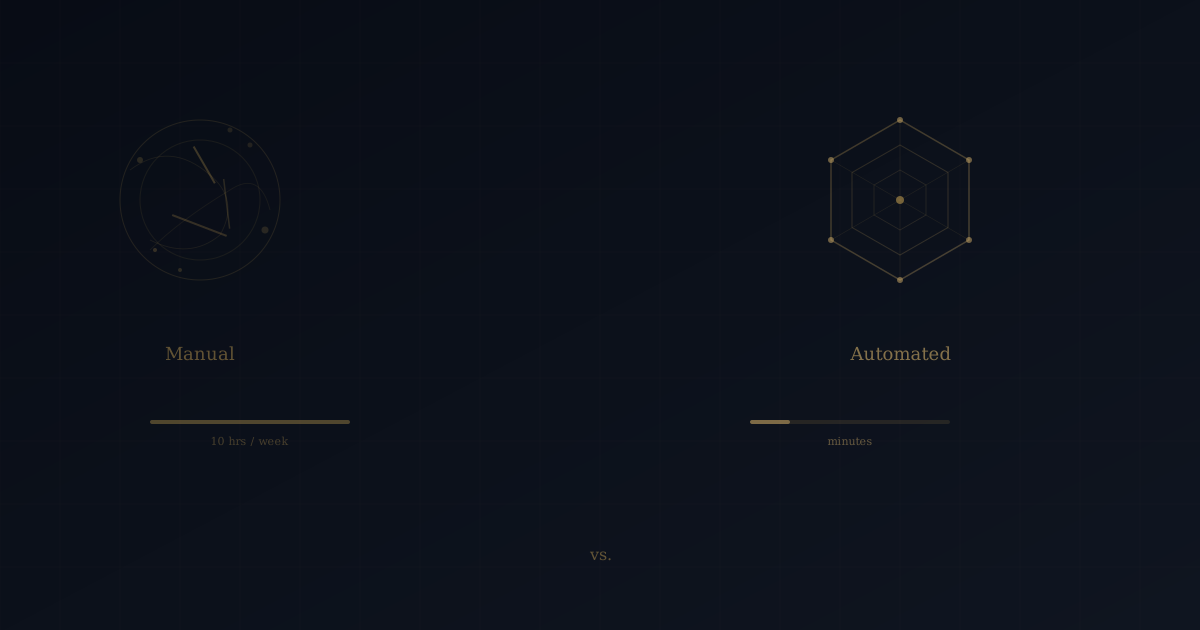
Sign Up for BetaTen hours a week. That is the conservative estimate for how much time the average household spends on logistics that have nothing to do with living well -- grocery runs, meal decisions, calendar juggling, subscription management, home upkeep tracking. Jipsa vs. doing it yourself is not really a fair comparison. One approach scales. The other does not.
The question is not whether you can handle it. You obviously can. The question is whether you should.
Where the Time Actually Goes
Most people underestimate their logistics overhead because it is distributed across dozens of small tasks. Five minutes here. Twelve minutes there. A half hour lost to "what should we have for dinner" that turns into scrolling recipes, checking what is in the fridge, and ultimately ordering takeout anyway.
Here is a realistic weekly breakdown for a two-adult household:
- Meal planning and grocery shopping: 3-4 hours (deciding meals, building lists, shopping or managing delivery orders, putting groceries away)
- Calendar coordination: 1-2 hours (syncing schedules, booking appointments, handling conflicts, remembering recurring events)
- Home management: 1-2 hours (tracking maintenance, reordering supplies, coordinating service providers)
- Financial admin: 1 hour (reviewing charges, managing subscriptions, budgeting)
- Decision fatigue overhead: 1-2 hours (the invisible tax of choosing between options all day, every day)
That last category is the one people never count. But decision fatigue is real, and it compounds. By evening, you are not tired from working -- you are tired from deciding.
What Jipsa Handles
Jipsa does not just shave a few minutes off each task. It removes entire categories of work from your plate.
Meals: From Blank Slate to Done
Without Jipsa, meal planning is a weekly negotiation between preferences, budgets, dietary needs, what is already in the pantry, and what sounds good. It is real cognitive work, and most people either spend too long on it or give up and default to the same five meals on rotation.
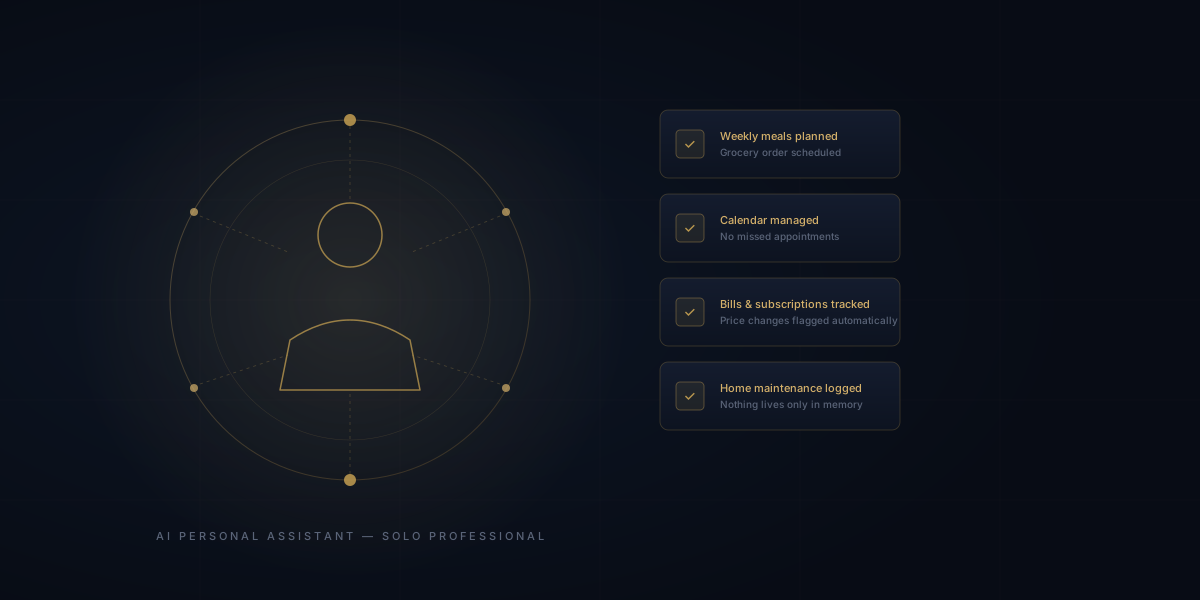
With Jipsa, your weekly meal plan is built automatically. It accounts for your dietary restrictions, your household's preferences, your budget, seasonal ingredients, and what you already have on hand. The grocery order is placed through your connected delivery service. You review it if you want to. Or you do not.
Time saved: 3-4 hours per week.
Calendar: From Juggling to Managed
You check your calendar. Your partner checks theirs. Someone texts about Saturday. You forget to book the dentist again. The school event conflicts with the work dinner. Sound familiar?
Jipsa reads all connected calendars, identifies conflicts before they happen, blocks time for recurring needs, and adjusts plans dynamically. Busy day at work? Jipsa already planned a simple dinner. Free Saturday? It surfaces local events that match your interests.
Time saved: 1-2 hours per week.
Home: From Reactive to Proactive
Most people manage their homes reactively. The filter gets changed when they notice the air quality dropping. The gutters get cleaned after the leak. The pantry gets restocked after they run out.
Jipsa tracks maintenance schedules, monitors consumption patterns, and handles reordering before you notice something is low. It coordinates with smart home devices and can schedule service appointments on your behalf. Your home runs itself.
Time saved: 1-2 hours per week.
Finances: From Scattered to Visible
Between streaming services, delivery memberships, gym fees, app subscriptions, and insurance premiums, the average household manages over a dozen recurring charges. Most people cannot list them all without checking.
Jipsa tracks every subscription and recurring charge, flags unusual spending, and gives you a clear view of where your money goes. No spreadsheets. No forgotten free trials that quietly convert to paid.
Time saved: 30-60 minutes per week.
The Math
Add it up. Even on the conservative side, Jipsa reclaims 6-10 hours per week. That is 300-500 hours per year.
What is an hour of your time worth? If you bill at $100/hour -- not unusual for the professionals Jipsa is built for -- that is $30,000-$50,000 in annual time value. Even if you value your personal time at half your professional rate, the return is substantial.
But this is not really about money. It is about what you do with the time.
What 10 Hours a Week Actually Looks Like
Ten hours is not abstract. It is concrete.
- It is a weeknight where you are fully present with your family instead of meal prepping
- It is a Saturday morning spent on a hobby instead of running errands
- It is the mental space to think about the promotion, the side project, the trip you have been meaning to plan
- It is going to bed without a running list of tomorrow's logistics in your head
The people who benefit most from Jipsa are not lazy. They are the opposite -- they are ambitious, busy, and running at capacity. They have optimized their professional lives. They just have not had a way to optimize the personal side until now.
The DIY Trap
There is a certain pride in doing it all yourself. Meal prepping on Sunday. Maintaining the perfect spreadsheet. Staying on top of every appointment and subscription. And if that process brings you genuine satisfaction, keep doing it.
But for most people, DIY household management is not a choice. It is a default. They do it because they have always done it, because existing tools are not smart enough to actually take things off their plate, and because the alternative has traditionally been hiring human help -- which comes with its own overhead of managing, communicating, and coordinating.
Jipsa is the third option. It is not a tool you maintain. It is not a person you manage. It is a system that learns how your household runs and handles the execution so you do not have to.
The Comparison
| Task | DIY | With Jipsa | |---|---|---| | Meal planning | 30-60 min deciding, every week | Automatic, preference-aware | | Grocery ordering | 30-45 min building lists, comparing prices | Generated and placed for you | | Calendar sync | Constant back-and-forth | Conflicts resolved proactively | | Home maintenance | Reactive, often forgotten | Tracked and scheduled automatically | | Subscription tracking | Manual spreadsheet or guesswork | Monitored and flagged in real time | | Morning planning | 15-20 min reviewing what is ahead | Briefing delivered to you |
The right column is not aspirational. It is what Jipsa does on day one.
Getting Started
You do not have to hand over everything at once. Most people start with one area -- usually meal planning and grocery delivery, because the time savings are immediately obvious. Within a week, they connect more services. Within a month, they wonder how they managed without it.
Jipsa is not about doing less. It is about doing less of the wrong things so you can do more of the right ones.
Ready to reclaim your 10 hours? Jipsa handles the logistics. You handle the living.
Let Jipsa handle it for you
The beta is open. Create your account and hand off the logistics of everyday life — free to start, no card required.
Sign Up for BetaFree Download
The AI Home Management Checklist
42 tasks AI can handle for your household — from meal planning to home maintenance. See exactly what to automate first.