AI for Solopreneurs: When You Are the CEO, CFO, and Head of Operations
Solopreneurs carry the entire operational weight of a business and a household alone. AI personal assistants solve the problem no productivity framework addresses: there is only one of you.
The beta is open — hand this off to Jipsa. Free to start, no card required.
Sign Up for BetaRunning a one-person business means you are the CEO making strategy calls at 9am and the operations coordinator scheduling the plumber at 3pm. You are the CFO tracking cash flow and the head of household managing the grocery order. AI for solopreneurs is not about running the business — it is about handling everything else so you can.
The productivity conversation around solopreneurs almost exclusively focuses on business tools: project management, invoicing, CRM, time tracking. It ignores the equally demanding operational layer underneath: the household, the personal logistics, the life administration that does not stop because you have a launch deadline.
The Solopreneur's Invisible Cost Center
A VC-backed startup can hire an operations manager. A growing agency can bring on an admin coordinator. A solopreneur absorbs all of those functions personally, often invisibly, in the hours outside the work that generates revenue.
The costs are real and compound:
Cognitive overhead. Deciding what to eat tonight is a trivial decision. Making it at 6pm after a day of high-stakes business decisions is not. Decision fatigue is a documented phenomenon, and solopreneurs face it across business and household simultaneously. Every grocery decision, maintenance appointment, and subscription review depletes the same reservoir as product strategy and client negotiations.
Opportunity cost. Hours spent on household logistics are hours not billing, not building, not networking. For a solopreneur at a meaningful hourly rate, the arithmetic is unfavorable. A personal AI that handles meal planning, grocery management, and home maintenance scheduling pays for itself in recovered time quickly.
Fragmentation. Switching between business mode and household logistics mode has a cognitive switching cost. Checking the pantry while reviewing a client proposal, or thinking about the water filter during a strategy session, fragments focus in ways that reduce output quality even when you account for the total time.
What AI Personal Assistants Do for Solopreneurs
The right AI personal assistant for a solopreneur handles the household layer so business focus can be protected. Practically, this means:
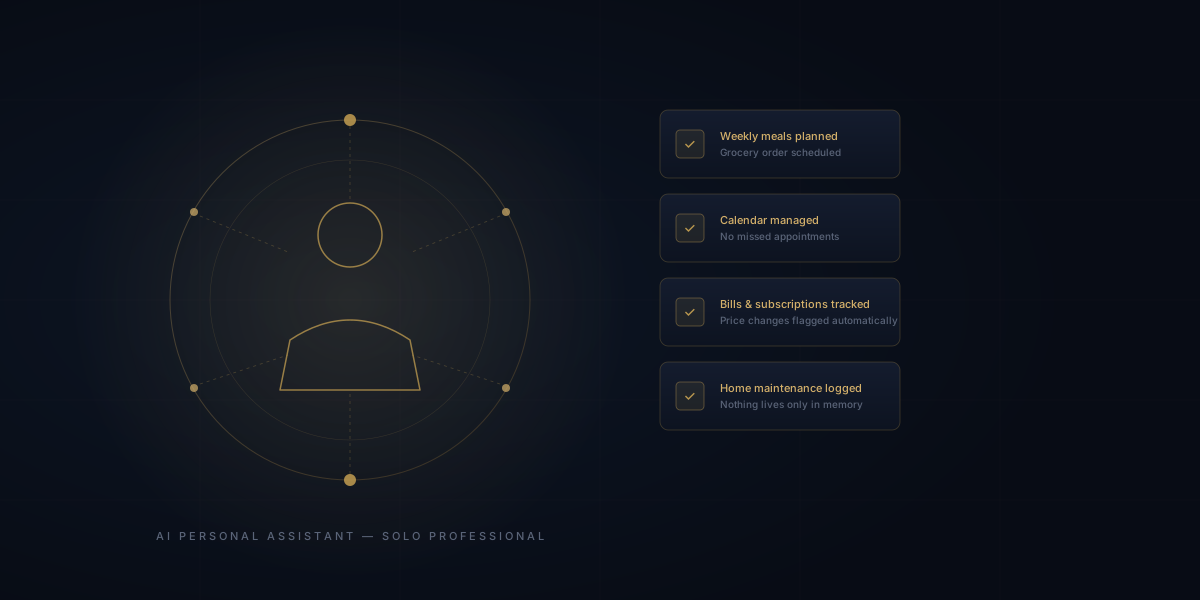
Autonomous meal and grocery management. Jipsa builds your weekly meal plan based on what you have, what you eat, and what your week looks like. The grocery order is generated automatically. You do not make grocery decisions — you make business decisions.
Calendar-aware scheduling. Your household schedule — maintenance windows, delivery timing, appointments — gets coordinated around your work calendar, not against it. A product launch sprint week does not accidentally become the week the HVAC service is booked for 2pm on Tuesday.
Subscription and expense tracking. Solopreneurs accumulate tools and subscriptions quickly. An AI that tracks what you are paying, surfaces unused subscriptions, and flags price increases gives you financial visibility without requiring you to run your own expense audit.
Maintenance and home management. Seasonal checklists, appliance service windows, lease and utility renewal timelines — the recurring administrative layer of running a household is tracked by Jipsa, not by you.
Why "One More App" Makes It Worse
The standard advice for overwhelmed solopreneurs is to add tools: a better task manager, a cleaner calendar system, a more disciplined journaling practice. This advice adds management overhead to an already management-saturated situation.
The fundamental problem with most productivity systems for solopreneurs is that they require active maintenance. You have to update the task manager. You have to enter the meal plan. You have to remember to check the household dashboard. The system itself becomes a task.
Jipsa is designed differently. It runs autonomously. Once you have set your preferences — how you eat, what your household looks like, how your week generally shapes up — it manages the household layer without requiring your active input. The grocery order appears. The maintenance reminders surface. The morning briefing reflects your actual day.
The goal is not a better system to manage. The goal is a system that manages itself.
Protecting the Founder Hours
Solopreneurs' time is categorically unequal. An hour of focused, high-value work — writing, building, selling, advising — generates disproportionate output compared to an hour spent on logistics. Protecting the highest-value hours from operational fragmentation is a business strategy, not a lifestyle preference.
The case for an AI personal assistant is most compelling for solopreneurs precisely because the time tradeoff is most visible. When you are the only person responsible for both the business and the household, every hour you do not spend on household logistics is an hour you can spend on work that compounds.
The mental load research on dual-income households talks about the invisible management work that slips into the margins. For solopreneurs, there is no partner to distribute that load to — and there is no corporate infrastructure to absorb it. You carry all of it, all the time.
AI handles the part that does not require your expertise.
Starting as a Solopreneur
The setup for a single-person household is fast. Your preferences are not complicated by other schedules, dietary restrictions, or competing priorities. You describe how you live, what you eat, what your week looks like — and Jipsa starts running.
Within a week: a grocery order you did not have to build, a maintenance reminder that surfaced before it became a problem, a morning briefing that actually matches the day ahead. Within a month: the household layer largely disappears from your active attention.
That is the solopreneur case for AI. Not optimization theater. Not another tool to manage. A system that handles the layer you cannot afford to keep managing personally.
Start using Jipsa free — no setup fee, no card required.
The hours you recover belong to the work that actually builds the business.
Related: What an AI butler actually does day-to-day and the hidden time cost of life admin.
Let Jipsa handle it for you
The beta is open. Create your account and hand off the logistics of everyday life — free to start, no card required.
Sign Up for BetaFree Download
The AI Home Management Checklist
42 tasks AI can handle for your household — from meal planning to home maintenance. See exactly what to automate first.