AI for ADHD: How to Manage Your Home When Your Brain Won't Cooperate
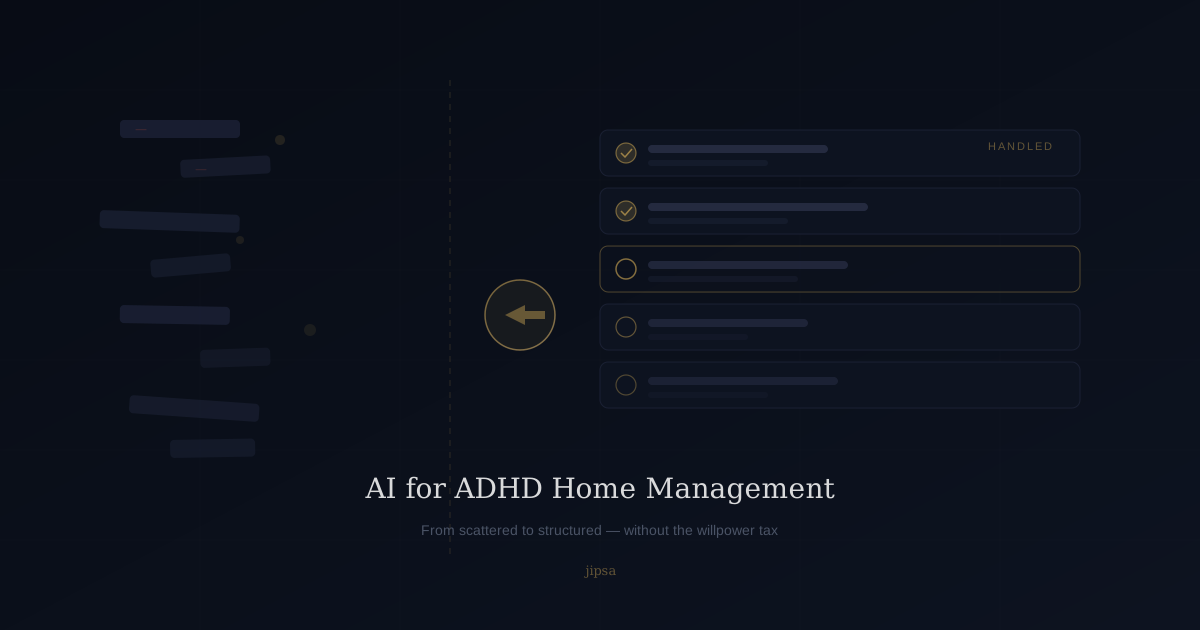
ADHD makes household management harder in specific, predictable ways. AI addresses those exact failure points — task initiation, working memory, and follow-through — without requiring more willpower.
The beta is open — hand this off to Jipsa. Free to start, no card required.
Sign Up for BetaIf you have ADHD, you already know that household management is not a willpower problem. You have plenty of ideas about what needs to happen. The problem is the gap between knowing and doing — the invisible friction that makes starting a task feel impossibly heavy, that causes you to forget something the moment you set it down, that turns a simple errand into a three-day mental battle.
AI for ADHD home management works because it targets the specific points where ADHD disrupts execution, rather than just adding more reminders to ignore or more items to a list you won't check.
Why Traditional Systems Fail for ADHD
Before getting into what works, it's worth being honest about what doesn't.
Traditional productivity systems — whether paper planners, calendar apps, or complex GTD setups — fail people with ADHD in a consistent pattern:
They require maintenance you don't have the bandwidth for. Every system that asks you to enter, categorize, and update tasks is a system that requires ongoing executive function to keep alive. ADHD depletes executive function. The system that seemed manageable in a focused Saturday setup session becomes a burden by Wednesday.
They remind you of tasks without helping you start them. A notification that says "pay electricity bill" is almost useless if the task-initiation barrier is the actual problem. You see the reminder, feel briefly stressed, close it, and forget until the next reminder.
They don't connect to your actual life. A to-do app doesn't know your grocery situation, your calendar, or which tasks require calling versus clicking. It holds a list. You still have to translate that list into action every single time.
AI is different because it can take the action itself — which is the specific piece that ADHD makes hard.
The ADHD Executive Function Stack — and Where AI Plugs In
Executive function is the cluster of cognitive skills that lets you plan, start, sustain, and complete tasks. ADHD affects all four stages, but in different ways. Understanding where the breakdowns happen helps explain why AI is unusually well-suited as a coping tool.
Task Initiation
The hardest step for most people with ADHD is starting. Not because the task is difficult, but because beginning requires an internal trigger that ADHD doesn't reliably fire. You can know exactly what you need to do and still sit paralyzed in front of it for twenty minutes.
AI addresses this by reducing the activation energy for starting. Instead of "I should schedule the car service," the AI says: "I scheduled your car service for Thursday at 10am — here's the confirmation." The initiation barrier disappears because the AI initiated for you.
Working Memory
ADHD affects working memory — the ability to hold multiple pieces of information in mind while acting on them. This is why you can be heading to the kitchen for something specific and arrive there with no memory of why. It's not forgetfulness in the traditional sense; it's that the information never got stable storage.
An AI butler acts as external working memory for your household. You don't have to remember that the filter needs changing, the passport renewal is due in six weeks, and you're low on coffee — the AI holds all of this and surfaces it at relevant moments. You offload the cognitive holding to a system that doesn't drop things.
Follow-Through
Starting a task is one challenge. Following it through to completion — especially multi-step tasks — is another. The phone call that requires you to be on hold. The errand that requires getting in the car. The appointment that requires calendar coordination with someone else. Each step creates another initiation point, another opportunity for ADHD to derail the loop.
AI compresses multi-step tasks into single actions. "Book the dentist" becomes one conversation with your AI, which then makes the call, finds availability, matches it to your calendar, and confirms. The follow-through happens without you running each step.
Practical Applications: What AI Handles for ADHD Households
Here is where AI household management makes a tangible difference for people with ADHD:
Grocery and Meals
Meal planning and grocery shopping are notorious ADHD weak spots. The mental overhead of planning meals, checking what you have, building a list, and actually buying things before you run out creates a fragile chain with multiple break points.
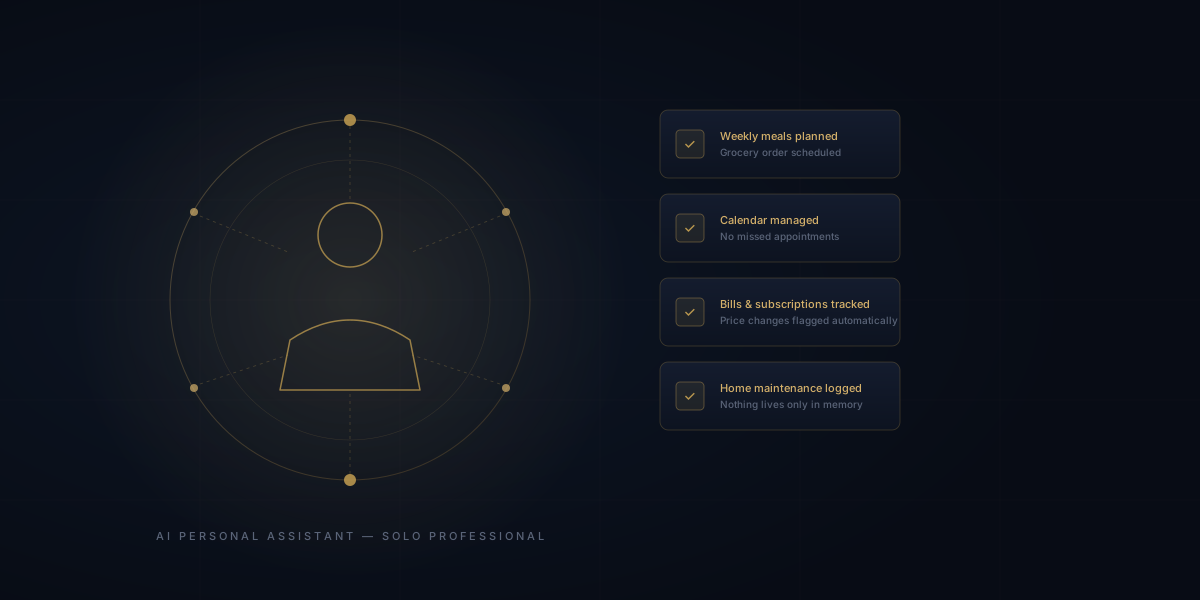
An AI butler takes this entirely off your plate. Based on what's in your pantry, your preferences, and your schedule, it plans meals and places the grocery order. You don't start from scratch every week. The chain that used to depend on you firing at every link now runs on its own.
Bill and Subscription Management
Late fees and missed payments are a universal ADHD experience — not from carelessness but from the gap between knowing something is due and taking action in time. AI connected to your financial accounts tracks recurring payments, surfaces upcoming renewals, and flags subscriptions that have gone unused. It doesn't just remind you; it can initiate the action directly.
The Background Task List
Every household has a category of tasks that are important but not urgent — the slow drain that needs a plumber, the insurance call, the birthday gift for next month. These live in a mental queue that ADHD makes unreliable. You think of them at the wrong time (3am) and forget them at the right time (Tuesday morning when you had a moment to act).
An AI butler holds this list in a way your brain doesn't have to. You mention something once — "need to call about the insurance claim" — and it tracks it, schedules it, or handles it without requiring you to hold it mentally.
Appointment Coordination
Scheduling is a multi-step executive function task that ADHD makes genuinely difficult. AI with calendar access handles the coordination: it knows your availability, books against it, confirms appointments, and sends reminders at the actual moment when you need to prepare — not three days in advance when the information won't stick.
The ADHD-Specific Case for AI Over Apps
The distinction matters: most "productivity apps for ADHD" are still apps. They're interfaces that require you to engage, enter information, check in, and maintain the system. They are designed for people who can reliably do those things.
A true AI butler is different because it does the work in the background. You don't manage it; it manages things. The bar for engagement is much lower — tell it what you need, confirm what it plans, and let it execute. For ADHD brains that struggle with maintenance-heavy systems, this distinction is the difference between a system that lasts three weeks and one that keeps working.
Try Jipsa free — no setup intensive enough to abandon, no list to maintain, no card required.
A Note on Perfectionism and Systems
Many people with ADHD have tried — and abandoned — many productivity systems. If that's your history, the impulse to distrust any new approach is completely rational. You have evidence.
The reason AI is worth revisiting isn't hype. It's mechanism. The tools that failed you before failed because they required you to use executive function to support executive function. The system needed you to keep it alive. AI flips the dependency: the system takes on the executive function work so your brain doesn't have to.
That is a fundamentally different structure — and it's worth one more try.
Read more on how AI handles the mental load and how the compounding effect of AI assistance adds up over 90 days.
Let Jipsa handle it for you
The beta is open. Create your account and hand off the logistics of everyday life — free to start, no card required.
Sign Up for BetaFree Download
The AI Home Management Checklist
42 tasks AI can handle for your household — from meal planning to home maintenance. See exactly what to automate first.