What to Automate First With a Personal AI Butler
Not sure where to start with AI automation at home? Here is the priority order that delivers the fastest time savings and the biggest quality-of-life wins.
The beta is open — hand this off to Jipsa. Free to start, no card required.
Sign Up for BetaYou have decided to try a personal AI butler. Or you are close to deciding. Either way, the same question comes up: what should it handle first?
The temptation is to automate everything at once. Resist it. The fastest path to real value is picking the right starting point — the tasks where automation delivers immediate, obvious relief. Get those right, and everything else follows naturally.
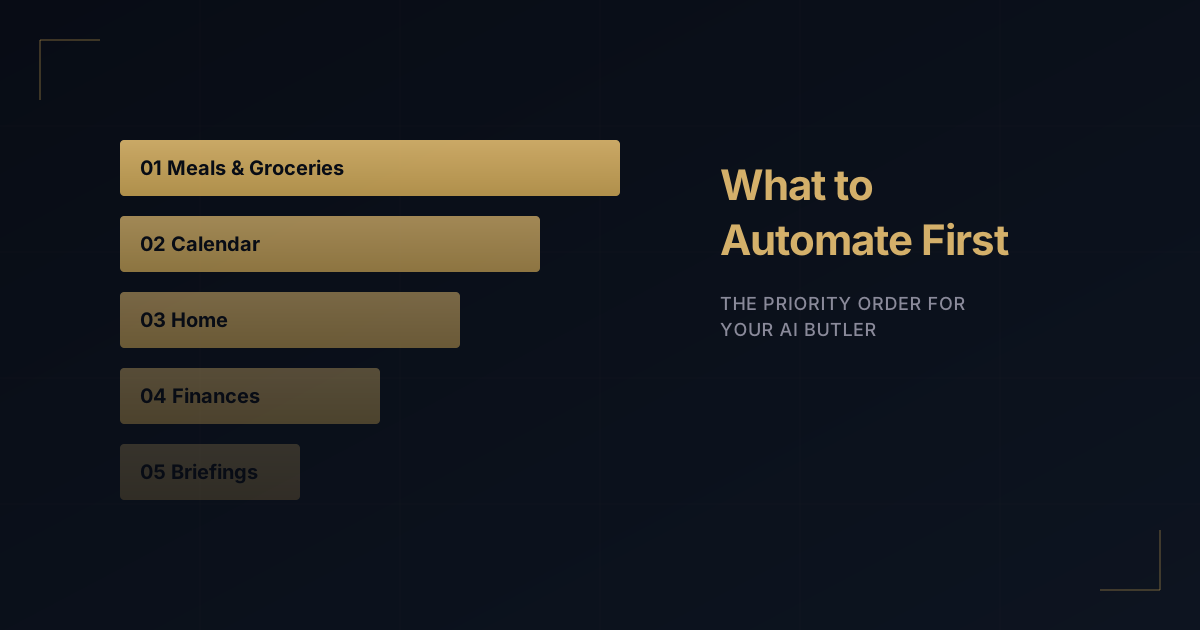
Here is the priority order that works for most households, based on where time and mental energy actually go.
Priority 1: Meal Planning and Groceries
This is the single highest-impact automation for almost everyone. Not because it is the most glamorous, but because it repeats relentlessly. You make food decisions multiple times a day, every day, forever.
The math is straightforward. Between deciding what to eat, checking what you have, building a list, placing an order or going to the store, and dealing with the inevitable "we forgot something" — most households spend five or more hours a week on food logistics alone.
An AI butler like Jipsa handles the full chain: builds meal plans around your preferences and dietary needs, checks your pantry, generates the grocery list, and places the order through your delivery service. It accounts for budget, seasonal produce, and what your household actually eats — not just what sounds good on a Pinterest board.
Start here because the time savings are immediate and the feedback loop is fast. Within one week, you know whether the system works for your household.
Priority 2: Calendar and Schedule Coordination
The second thing to hand over is your calendar — especially if more than one person lives in your household.
Schedule coordination is invisible work. It does not feel like a task because it happens in fragments: checking availability, texting your partner, rescheduling a dentist appointment, remembering that Tuesday evenings are already spoken for. But those fragments add up to a significant mental load.
When your AI butler has calendar access, it can flag conflicts before they become problems, block time for recurring tasks, and adjust your evening plans based on how packed your day was. A smart calendar that understands context — not just time slots — changes how your weeks feel.
This pairs naturally with meal planning. If Jipsa knows you have back-to-back meetings until 6 PM, it does not plan a meal that requires an hour of prep. It suggests something fast or schedules delivery for exactly when you need it.
Priority 3: Home Maintenance Tracking
Nobody wakes up excited to track when the HVAC filter was last replaced. That is precisely why it does not get done until something breaks.
Home maintenance is a perfect automation target because it is predictable, recurring, and easy to forget. Filters, gutters, smoke detector batteries, appliance servicing — these follow schedules that a system can manage better than a human trying to remember.
Hand your home maintenance checklist to your AI butler and stop carrying it in your head. Jipsa tracks maintenance cycles, sends reminders at the right time, and can even schedule service appointments on your behalf.
This is lower urgency than meals and calendars — nothing breaks in week one if you skip it — but the long-term savings are significant. Preventive maintenance is always cheaper than emergency repairs.
Priority 4: Financial Visibility
You probably know your mortgage payment and your salary. But do you know exactly what you spent on subscriptions last month? Or how your grocery costs have trended over the past quarter?
Most people operate with a vague sense of their finances rather than real visibility. An AI butler does not replace your accountant or investment advisor. What it does is surface the information you are currently ignoring: recurring charges you forgot about, subscriptions you no longer use, spending categories that crept up without you noticing.
Automate financial visibility after the daily logistics are handled. It requires less frequent attention but delivers compounding value — the $14/month subscription you cancel today saves $168 over the next year.
Priority 5: Morning Briefings
Once your AI butler is managing meals, calendar, home, and finances, the final piece is how that information reaches you.
A morning briefing is not a notification. It is a curated summary of what matters today: your schedule, anything the system handled overnight, tasks that need your attention, weather that affects your plans, and anything unusual in your household operations.
This is the moment where automation stops feeling like a set of disconnected tools and starts feeling like a system. You wake up, read a two-minute summary, and your day is already organized.
The Order Matters
These priorities are not arbitrary. They follow two principles:
Frequency first. Automate the tasks you do most often before the ones you do occasionally. Meal planning happens daily. Home maintenance reviews happen monthly. The daily wins compound faster.
Independence second. Each priority builds on the one before it. Calendar context improves meal planning. Home maintenance benefits from calendar awareness. Financial tracking is richer when it includes grocery spending data. Morning briefings are only useful when there is enough automated activity to brief you on.
Skip ahead and you get isolated automations that do not talk to each other — which is exactly why most productivity apps fail.
What Not to Automate Right Away
A few things are tempting but better left for later:
Travel planning. It is high-value but infrequent. Get the daily systems running first, then let your AI butler handle your next trip once it already understands your preferences and budget.
Gift buying. Useful, but it depends on the system knowing your relationships and preferences well. Give it time to learn before asking it to pick a birthday gift.
Wellness tracking. Important, but deeply personal. Start with the logistical wins that free up the time and headspace to focus on wellness deliberately, not as another automated feed.
Start With One Thing
If this list feels like a lot, ignore everything after Priority 1. Connect your grocery delivery service, let your AI butler plan a week of meals, and see what happens. Most people expand from there within days — not because they are told to, but because the relief is obvious.
The goal is not to automate your entire life overnight. It is to remove the tasks that drain your time without rewarding your attention. Meal planning does not spark joy. Tracking HVAC filters does not fulfill you. Let a system handle the logistics so you can spend your time on things that actually matter.
Ready to find out what your week looks like with the busywork handled? Try Jipsa for free and start with the task that drains you most.
Let Jipsa handle it for you
The beta is open. Create your account and hand off the logistics of everyday life — free to start, no card required.
Sign Up for BetaFree Download
The AI Home Management Checklist
42 tasks AI can handle for your household — from meal planning to home maintenance. See exactly what to automate first.