How Jipsa Manages Your Household So You Don't Have To
Groceries, meals, schedules, maintenance -- Jipsa handles the invisible workload of running a home. Here is what AI household management actually looks like.

AI household management is not about smart speakers responding to commands. It is about an intelligent system that quietly handles the operational workload of running a home -- the meal planning, grocery logistics, schedule coordination, and maintenance tracking that nobody puts on a resume but everyone spends hours doing.
Jipsa manages your household the way a great chief of staff manages an executive's day: by understanding priorities, anticipating needs, and executing without requiring constant direction.
The Invisible Workload
Running a household involves hundreds of micro-decisions per week that most people never quantify. Research from the American Time Use Survey puts the average at 15-20 hours per week spent on household management tasks for dual-income families. That includes meal planning, grocery shopping, cooking logistics, cleaning coordination, home maintenance scheduling, bill tracking, and calendar management.
The mental load is worse than the time cost. It is not just doing the tasks -- it is remembering that they need to be done. Knowing the dishwasher filter needs cleaning. Tracking when the HVAC service is due. Remembering that your kid needs new cleats before Saturday's game.
Most of this work is invisible until it is not done. Nobody notices when the pantry is stocked. Everyone notices when there is nothing for dinner.
What Jipsa Actually Handles
Jipsa is not a household management app you have to maintain. It is a system that manages your household and informs you when it needs your input. Here is what that looks like in practice.
Meal Planning and Grocery Logistics
This is Jipsa's strongest capability and the one most households feel first. Every week, Jipsa generates a complete meal plan tailored to your household -- factoring in dietary restrictions, preferences, pantry inventory, budget, and your schedule.
Busy Tuesday with meetings until 7pm? Jipsa plans a 20-minute meal, not a two-hour recipe. Hosting friends on Saturday? Jipsa scales the plan, adjusts the grocery list, and accounts for the extra spend in your weekly budget.
The grocery list builds itself from the meal plan. Jipsa cross-references what you already have, adds household staples that are running low, and routes the order through your connected delivery service. No more wandering the aisles wondering what you forgot.
Schedule Orchestration
Jipsa reads your calendar and your household members' calendars. It does not just display events -- it reasons about them. A packed Thursday means simpler dinner plans. An open Saturday morning means Jipsa can surface local events worth attending. A dentist appointment at 2pm means Jipsa adjusts the day's briefing to flag the time commitment.
This cross-domain awareness is what separates Jipsa from a calendar app. Your calendar tells you what is happening. Jipsa tells you what it means for the rest of your day.
Morning Briefings
Every morning, Jipsa delivers a personalized briefing that consolidates your day into a single, actionable view. Weather, schedule, meal plan, anything that needs your attention, and anything Jipsa handled overnight.
This replaces the 15-20 minute scramble most people do each morning -- checking weather, scanning calendars, figuring out dinner, triaging the day's logistics. Jipsa has already done it.
Home Maintenance Tracking
Homes have maintenance cycles that most people track through crisis -- you remember the furnace filter when the furnace stops working. Jipsa tracks these cycles proactively: HVAC filter replacements, gutter cleaning schedules, appliance warranty dates, seasonal tasks like winterizing or spring maintenance.
When something is due, Jipsa surfaces it in your briefing with a recommended action. No spreadsheets. No forgetting.
Financial Visibility
Jipsa monitors household spending patterns, tracks subscriptions, and flags anomalies. That streaming service you signed up for during a free trial and forgot about? Jipsa catches it. The annual insurance renewal that always surprises you? Jipsa warns you a month early.
This is not a replacement for a financial advisor. It is the visibility layer between your money going out and you knowing where it went.
A Day Managed by Jipsa
Here is what a typical Wednesday looks like when Jipsa is managing your household.
6:30am -- Morning briefing arrives. Weather is 52 degrees and rainy. You have a 10am meeting, a 1pm call, and your daughter has soccer practice at 4:30. Tonight's dinner is lemon herb chicken with roasted vegetables -- a 35-minute recipe because Jipsa saw your afternoon is packed. Groceries for the week arrived yesterday. The furnace filter is due for replacement this weekend -- Jipsa added a reminder for Saturday.
12:00pm -- You check your briefing mid-day. Jipsa updated the evening plan: your 1pm call got moved to 3pm (it noticed the calendar change), so it suggests prepping dinner ingredients during the gap between the call and soccer pickup.
5:00pm -- You start dinner. The recipe is already on your phone. Every ingredient is in the kitchen because the grocery order was built from this exact meal plan. Nothing missing. No substitutions needed.
8:30pm -- You get a notification: Jipsa found a local food festival this weekend that matches your family's interests. It also flagged a subscription renewal hitting next Tuesday that you might want to cancel.
At no point did you have to plan, research, remember, or coordinate. You just lived your day. Jipsa handled the rest.
Why This Is Different From Smart Home Apps
Smart home platforms control devices. Jipsa manages the life happening inside the home. These are fundamentally different problems.
Your Nest thermostat adjusts temperature. Jipsa knows you are hosting dinner guests Friday and adjusts the thermostat schedule to have the house comfortable before they arrive, while also handling the menu, grocery order, and calendar blocking for prep time.
Your Alexa sets timers and plays music. Jipsa coordinates the invisible logistics that determine whether your evening is stressful or smooth.
The difference is scope. Smart home apps are device controllers. Jipsa is the intelligence layer that makes your home actually smart by understanding context, not just commands.
Who This Works Best For
Jipsa's household management works best for people who recognize that running a home is work and want to delegate it to a system that is better at logistics than any individual trying to juggle it alongside a career, relationships, and personal time.
Specifically:
- Dual-income households where neither partner has bandwidth to be the full-time household operations manager
- Busy professionals who would rather spend evenings on what matters than on meal prep and maintenance scheduling
- Parents who are already operating at capacity and need the invisible workload to be handled, not just tracked
- Anyone who has ever stood in front of an open fridge at 6:30pm with no plan and no energy to make one
Getting Started Is Simple
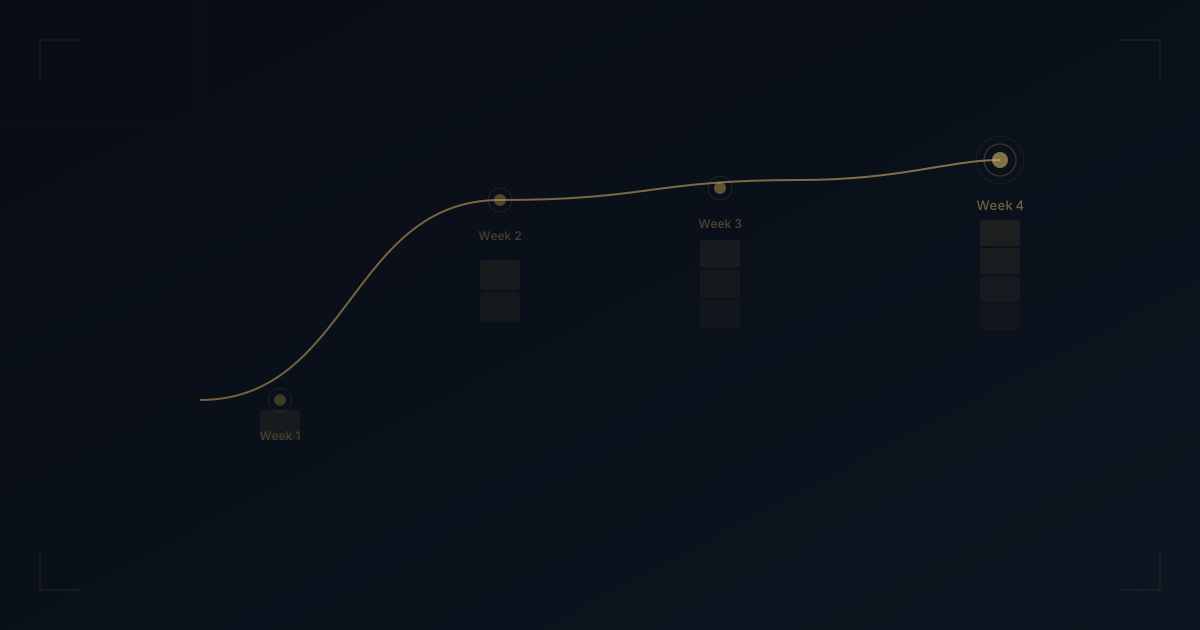
Jipsa delivers value the first week. Connect your grocery delivery service and let Jipsa handle meal planning and ordering. Most households expand to additional capabilities within days -- not because of a sales funnel, but because once one area of logistics disappears, you notice how much time the others still consume.
Your household runs on thousands of micro-decisions. Jipsa makes them for you -- better, faster, and without the mental tax. That is what AI household management actually looks like.
Free Download
The AI Home Management Checklist
42 tasks AI can handle for your household — from meal planning to home maintenance. See exactly what to automate first.
Ready to let Jipsa handle this for you?
Join the waitlist — be first to get access when we launch.